Enhance Your Lawn with Our Specialized Services.
In addition to our lawn care programs, we offer specialized services to further improve lawn health, appearance, and resilience. These services are recommended based on your lawn’s needs and may be scheduled throughout the growing season.
Each service is designed to complement your existing program and help achieve a thicker, healthier, and more vibrant lawn.
-
What it does:
Aeration & overseeding is a core lawn improvement service designed to relieve soil compaction and improve turf density. Aeration creates openings in the soil that allow air, water, and nutrients to reach the root zone more effectively. Overseeding follows by introducing high-quality grass seed directly into the lawn to improve thickness and fill in thin or bare areas.Purpose & Benefit:
Over time, soil naturally becomes compacted, making it harder for turf to thrive. Aeration helps restore balance by opening the soil structure, improving root development, and increasing nutrient uptake.Overseeding complements this process by introducing new grass varieties that strengthen turf density and improve overall lawn appearance.
Together, they create a healthier, more resilient lawn by:
Reducing soil compaction and improving root development
Increasing air, water, and nutrient movement into the soil
Thickening turf and filling in thin or bare areas
Improving overall lawn density and stress resistance
What to expect:
After aeration, small soil plugs will be visible across the lawn. These plugs naturally break down over time and return nutrients to the soil. Overseeding is applied immediately following aeration to maximize seed-to-soil contact and improve germination success.New grass growth will develop over the following weeks depending on weather and watering conditions.
When it’s performed:
Typically performed in the fall, with spring applications available depending on lawn conditions and program goals. -
What it does:
Topdressing with compost involves applying a thin layer of high-quality, nutrient-rich compost across the lawn surface. This process improves soil structure, increases organic matter, and enhances the overall growing environment for turf.When paired with aeration and overseeding, it becomes a complete soil and turf improvement system—supporting both soil health and new grass establishment.
Purpose & Benefit:
Compost is a foundational soil amendment that helps rebuild and improve long-term turf health. It increases organic matter, stimulates beneficial microbial activity, improves moisture retention, and enhances nutrient availability within the soil profile.This creates a stronger growing environment that supports healthier, more resilient grass from the root level up. For organic-minded clients, compost is especially valuable because it improves soil function naturally rather than relying solely on synthetic inputs.
When combined with aeration and overseeding, the results are significantly enhanced:
Aeration opens the soil profile for better compost and seed integration
Compost improves soil biology and structure for sustained plant health
Overseeding introduces new grass to fill in thin or bare areas
Together, these practices build a thicker, healthier, and more resilient lawn over time.
Key benefits include:
Improved soil structure and reduced compaction
Increased organic matter and microbial activity
Better moisture retention and drought resistance
Enhanced nutrient availability for sustained growth
Thicker turf density when paired with overseeding
What to expect:
A light layer of compost will be visible after application and will gradually work into the soil through watering, rainfall, and mowing. When overseeding is included, new grass will begin to establish as conditions allow for germination.When combined with aeration, the compost integrates more effectively into the soil profile, maximizing soil improvement and seed-to-soil contact for better overall results.
When it’s performed:
Typically performed in the fall or spring. Best results are achieved when coordinated with aeration and overseeding, allowing all three components to work together for maximum soil and turf improvement. -
What it does:
Slice seeding is a precision seeding method that mechanically cuts small grooves into the soil and places grass seed directly into those openings. This ensures strong seed-to-soil contact and is especially effective for lawns with thin coverage or larger bare areas.Unlike overseeding, which distributes seed across the surface, slice seeding places seed directly into the soil for improved germination and establishment in more challenging areas.
Purpose & Benefit:
Slice seeding is used when a lawn requires more aggressive establishment or repair than standard overseeding alone can provide. By placing seed directly into the soil, it improves germination rates and supports stronger turf development in areas where grass is struggling to recover.To improve coverage and ensure more uniform establishment, the lawn is typically cross-sliced during application, creating a grid pattern that increases seed-to-soil contact across multiple directions.
Key benefits include:
Improved seed-to-soil contact for higher germination success
Stronger establishment in thin or bare areas
More complete and uniform coverage across the lawn
Faster recovery in damaged or weakened turf areas
What to expect:
The lawn will show light, crisscrossed seeding lines after application. These gradually disappear as seed germinates and new grass begins to establish. Results will depend on weather, watering, and soil conditions during the establishment period.When it’s performed:
Typically performed in early fall or spring when soil temperatures support active seed germination and consistent growth. -
What it does:
Turf disease and specialty treatments address specific lawn conditions that may develop due to environmental factors such as heat, humidity, or excess moisture. These applications include fungicides and other targeted treatments designed to protect and restore turf health.Purpose & Benefit:
Lawn diseases can develop quickly under the right conditions and often return year after year if not properly managed. Timely identification and treatment are critical to preventing long-term damage.Fungicide applications can be used both preventatively and curatively, depending on lawn history and seasonal conditions. Lawns with a history of disease often benefit from preventative applications to reduce the likelihood of recurrence.
Key benefits include:
Protection against common turf diseases during high-risk periods
Reduced turf damage through early intervention
Improved lawn recovery and overall appearance
Proactive management for lawns prone to recurring issues
What to expect:
Treatment recommendations are based on current lawn conditions, weather patterns, and past history. In some cases, multiple applications may be required for effective control.Results will vary depending on severity, timing, and environmental conditions at the time of treatment.
When it’s performed:
Applications are performed based on environmental conditions and disease pressure, typically during warm, humid periods when turf is most vulnerable.Additional Information:
Specialty treatments are evaluated on a case-by-case basis and are most effective when incorporated into an ongoing lawn care program for proper timing and monitoring. -
What it does:
Anti-desiccant treatments are applied to ornamental plants and evergreen shrubs to help reduce moisture loss during the winter months. This protective coating helps plants retain moisture and minimize damage caused by harsh winter conditions.Purpose & Benefit:
During winter, evergreens continue to lose moisture through their needles or leaves while the ground remains frozen, limiting water uptake. This can lead to winter burn, causing browning and damage to plant tissue.Anti-desiccant applications form a protective barrier that helps reduce moisture loss and protect plants from drying winds and extreme temperature fluctuations.
Key benefits include:
Reduced risk of winter burn and dehydration
Protection from wind and cold-weather stress
Improved plant health and appearance in spring
Added protection for sensitive or exposed plantings
What to expect:
Plants are coated with a clear protective solution that helps seal in moisture. The treatment is not visually intrusive and will naturally wear off over time.When it’s performed:
Typically applied in late fall or early winter, prior to prolonged freezing conditions and winter exposure.
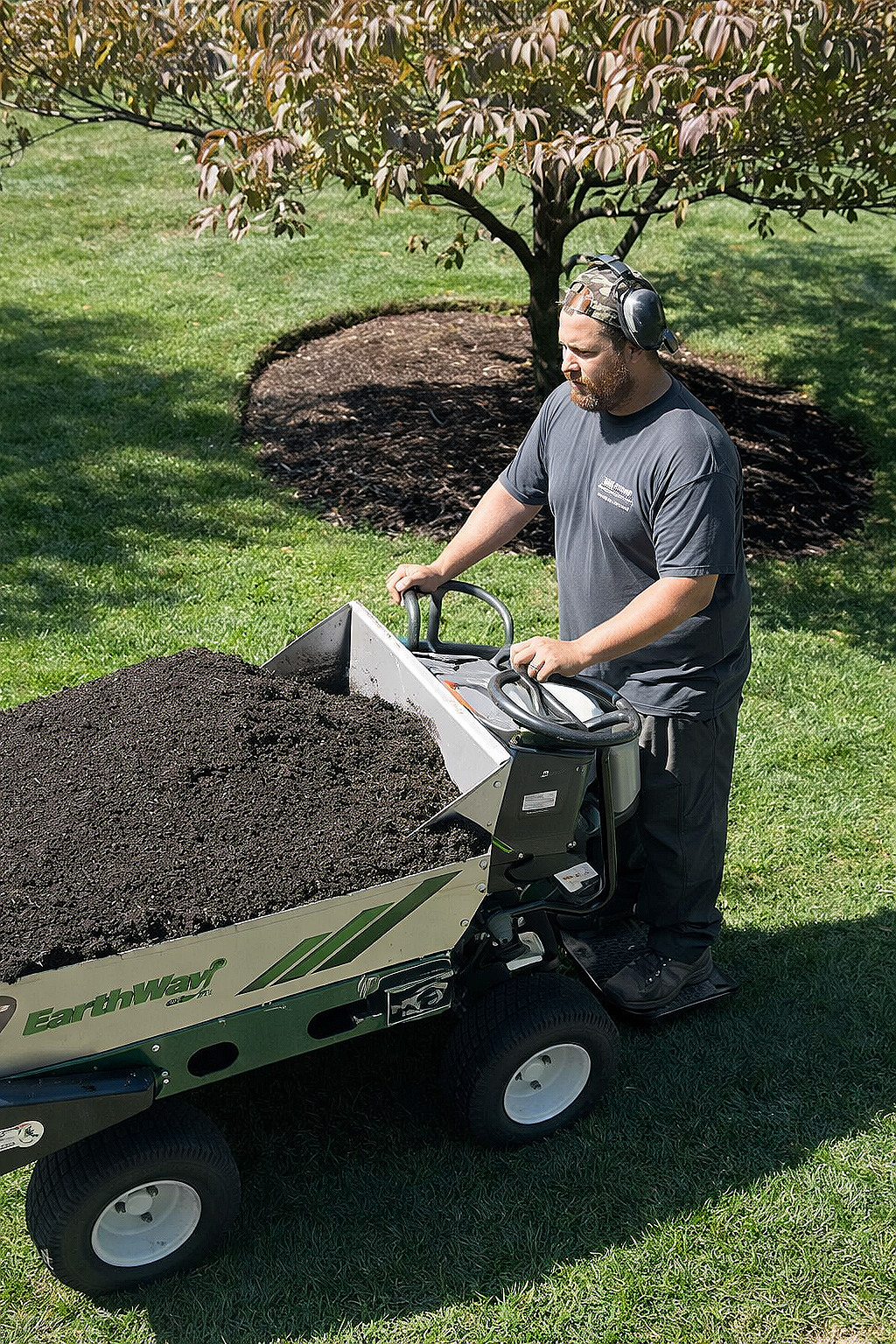
Anthony topdressing with compost to enhance soil structure and promote a healthier lawn.